The Founder’s View: A Q&A with Sowmya Balendiran and Sri Sailaja Nori of Sea6 Energy
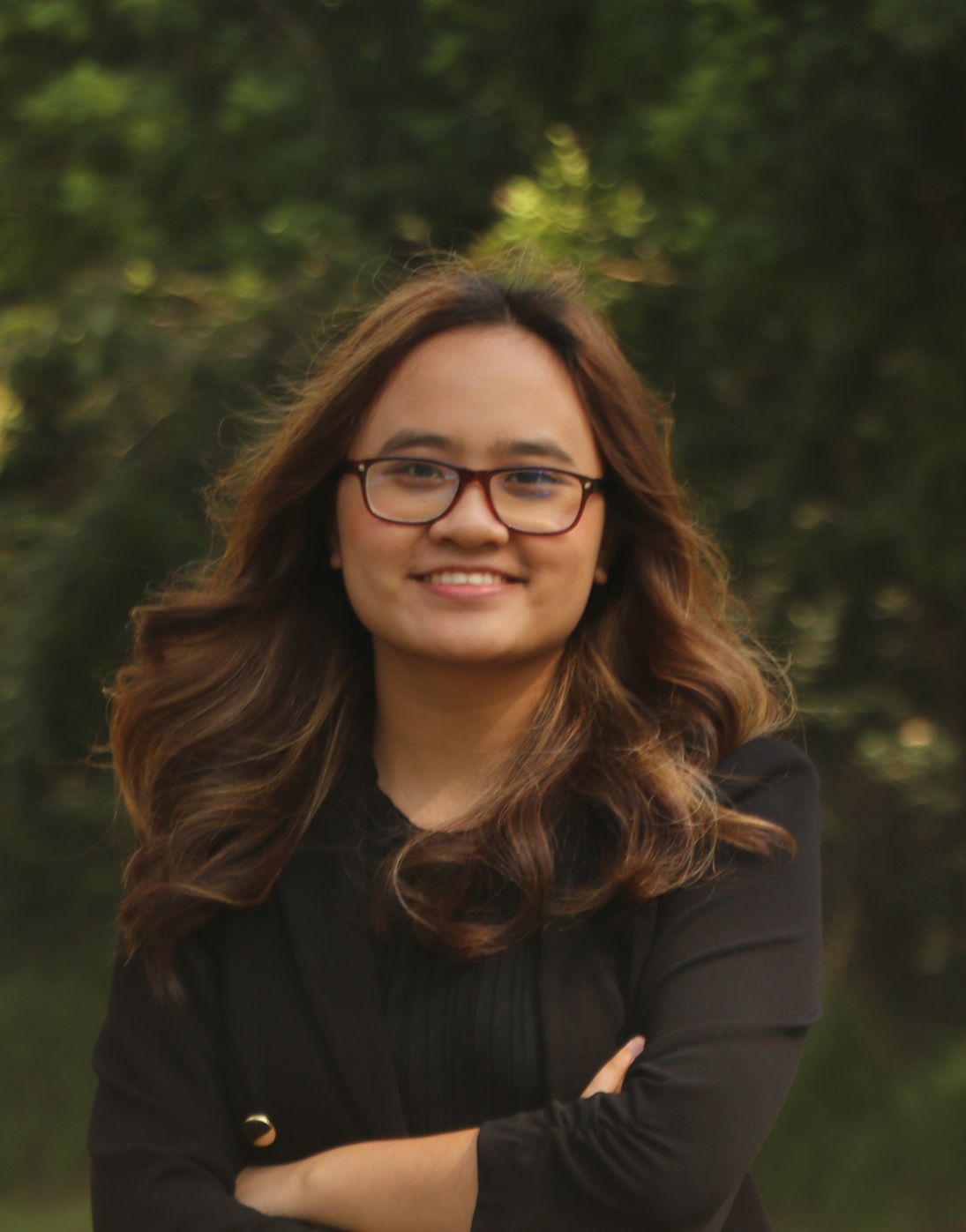
"The problem that we have taken on is to transform the entire way agriculture can be done, and how it can be done in the oceans. This is not a problem like developing software or hardware, where we’re putting existing pieces together. We’re creating an entire ecosystem which did not exist before." —Sowmya Balendiran, Sea6 Energy
Welcome to The Founder’s View, a series where we chat with company founders building the future of seaweed and ocean innovation. We explore their story, the successes and challenges they've faced, and how their journey can serve as guidance for other founders in the ocean innovation space.
For this edition, we sat down with Sowmya Balendiran and Sri Sailaja Nori, Chief Business Officer (CBO) and Chief Scientific Officer (CSO) of Sea6 Energy: a deeptech company advancing innovation in large-scale, mechanized seaweed farming while simultaneously developing select market applications in agriculture, bioplastics, food and biofuels. Their vision is to build a sustainable planet free of fossil fuels.
Tell me about your journey that led you to Sea6 Energy. What motivated you to start? What keeps you going in challenging times?
Sailaja: I've always been fascinated by science and its impact on society. A lot of problems around us have been solved by science, whether it's in the medical field, agriculture, or food. From my childhood, I really wanted to be doing innovation and science to create real-world impact.
While we were in our pre-final year of college, we all got together as a team to do a project for MIT (iGEM) on engineering bacteria to build a stresskit. When we were brainstorming about our dependence on fossil fuels, and the need to create a new, independent feedstock that will really change the paradigm for the entire world, that really resonated with me deeply. It inspired me to actually just jump in and do this right out of college, despite none of us having entrepreneurial experience.
Sowmya: When I was in college, I had this entire plan sorted out in my head: I'm going to finish college, go to the US, get my PhD, get a job, and then transform my life. In a normal Indian family, education is the way to create your life ahead. I looked at my college seniors who were doing great, and said, “That's the path I'm going to follow.”
That is, until I landed an internship in our third year of college. I met Sailaja, Nelson (CEO of Sea6 Energy), and a couple of our other friends. Our project really transformed my way of thinking. I realized that we don't have to go somewhere else. We have really talented people in our country, and if we stick together, we can make a transformation happen right here.
It was a very hard choice. Given our personal circumstances, it would have been a lot more ideal for us to have taken jobs or gone abroad. But choosing to do this was probably the best decision of our lives. I don't think any other path would have given me this kind of learning and opportunity. So that, and the people I'm doing this with, has always been my number one blessing.

What kind of business and/or scientific challenges have you encountered throughout Sea6 Energy's journey, and how are you overcoming/have overcome them?
Building the Right Team
Sowmya: Our first challenge was hiring the right talent. You're a small startup with a vision to become something, but at the point when you're really hiring your most critical people, nobody's heard of you. They’re taking a huge jump by betting on your potential.
It took me two years to hire our Head of Indian Business, and then it took me another nine months to hire our International Business Head. We had to wait to get and convince the right people at the right time.
Today, our entire senior leadership team is a group of stunning people from top-tier institutes who could be anywhere else in the world, but they chose to be here and build this with us. That has been a major success for Sea6 Energy. We’ve also been lucky to find investors who are passionate to be in this for the long term. But at that initial point, convincing people to bet on us and our idea? I think for all founders, that's probably one of the most critical and challenging things that we do.
Building Credibility and Trust
Sailaja: As Sowmya said, we were nobody when we were starting Sea6 Energy. Five years into the company, we created a product for agriculture, but none of the agricultural companies knew about Sea6. From there, it was all about establishing credibility with our customers, and showing that we are capable of making the right product.
One thing that really helped us overcome this was the effort and resources that went into proving that the product was really consistent in the field with demonstrated scientific mode of action. Sea6’s ability to manufacture and patent products in the early stages of the company added a lot of credibility for the entire approach to the customers.
Building on real solid science helped us bridge that gap with major companies too. When multinational agricultural companies like FMC came to do due diligence on us, we were really prepared to show that we are capable of doing world-class science. That changed the game for us.
It's not that we don't have challenges in our day-to-day product development and customer engagement. But we approach it from first principles and solve those problems. That's how we build credibility, and bring the best products into the market backed by quality, backed by science.
Sowmya: The testament to that today is that we’re selling in 31 countries globally. Our products are registered in multiple geographies, in all of the major countries. And we only started our commercial journey about eight years ago. To grow from zero to where we have come today in such a short period of time has been an incredible journey.

What successes have you seen since the start of Sea6 Energy? What helped you achieve that growth and success?
The Feedstock of the Future
Sailaja: For us, demonstrating that the next generation feedstock is possible was a big breakthrough. We really betted on it when we started in 2010, because that was the core vision of Sea6 Energy: to do large-scale ocean agriculture and create a new feedstock for the entire world.
The First Square Kilometer Farm
Sailaja: Commissioning the first square kilometer mechanized tropical seaweed farm in Indonesia in 2024 was a huge milestone for Sea6 because it demonstrated that we are capable of doing large-scale ocean farming. While we still have some teething issues we are working on resolving, it is a testament to the fact that this crazy idea we had is actually possible.
Sowmya: Sometimes we get asked, “why 15 years? Isn't that a long time for a company?” Well, the problem that we have taken on is to transform the entire way agriculture can be done, and how it can be done in the oceans. This is not a problem like developing software or hardware, where we’re putting existing pieces together. We’re creating an entire ecosystem which did not exist before.
Going Global
Sailaja: We were the first Indian company to discover and invent a new active ingredient in the agricultural space and go global. We are very proud that we created that category, and that our business team could take that to farmers across the world and have an impact on improving their crop yields and, in the long term, their soil health.
We built within a space which was very crowded, but we earned a name there. We continue to innovate in not just agriculture, but in biomaterials and fuels as well.
Sowmya: We also showed that seaweed can be made into crude oil. I think nobody in the world had shown that it's possible before us. It is still a long way to go to scale it up, but to even show the proof of concept that it can be made was huge.
Is there a particular trend or area in the seaweed and oceans space that you're really excited about?
Sowmya: We’re really excited about the fact that we could transform the oceans into a very sustainable aquaculture opportunity. Seaweed is one part of it, but in general, if you look at the last 10,000 years of human civilization, we have only been focusing on land. We've overused and abused it, and there's not much left in many countries.
Now, we have an opportunity to do things the right way on the oceans. A lot of companies are coming in to make sure that we are able to sustainably use marine resources for a variety of solutions. I think that's going to be a huge paradigm for the future.
Sailaja: At the intersection of biology and engineering, a lot is possible in the oceans. How we harness this, and how we ask questions on what is possible and what we can do, is really up to us. The sky—no, the ocean is the limit.

What advice do you have for other founders who might be thinking about or beginning to start their own company?
Build Your Community
Sailaja: People are the key, whether it's the co-founders that you choose to start with, or the people you want to bring into the company. Finding the right set of people who are aligned with the vision is really key for any startup to succeed and blossom. Having the right set of investors who really believe in your business also matters.
Sowmya: Ask for help and get advisors. Nobody can do anything by themselves. Sometimes founders feel that we can do everything, and that we know everything—but it’s absolutely not the case. These advisors could be anybody: your friends, your family, your investors, or somebody from the industry. However you get them, you need the right people to support you in your journey.
Begin With Passion
Sowmya: If you start a company only for making money, you are going to be extremely disappointed very quickly. You need to start a company because you're really passionate about what your idea can do for the world. Then, the money will follow.
It's really important to keep those priorities in the right order. Start because you think that your idea can really make a difference. Start because you like the people you're starting with.
Have Strong Commitment
Sailaja: Perseverance and patience are really key in building deep tech startups. Things are not built overnight. It may take a few years, and in some cases, for products to mature from technology to an actual sale, it may take five to seven years. These are the real timelines for product development to mature in life sciences. You really need to be committed to making it happen.
Sowmya: Don’t give up. Many times, people will tell you that your idea is bad, and that you should be doing a hundred other things. For every one person who believes in your idea, there could be five people who say that it is not going to work. But hold onto your conviction and believe in what you do.
Manage Your Finances Wisely
Sailaja: Everybody knows that cash is the king, but I think conserving cash and looking at cash flows is really important. As part of investment and building a business, that is something we learn the hard way sometimes.
It really takes a village, right? To do something as difficult as starting your own company.
Sowmya: Absolutely. If you’re a female founder, you definitely need a village to support you.
I remember when I was in 8th grade, a renowned woman business leader came to my school to speak. Somebody asked her about the most important decision in her life she’s ever made. She answered, “choosing your partner.”
Being a young girl, I was furious. I thought, how is choosing your partner the most important decision in your life? Women can do so much more with or without partners. Every negative feeling just… came out.
But now, 20 years later, I couldn't agree more. Because it's not just your partner—it's the whole ecosystem that you build. The friends you have, the family, and any other support you can get to make sure you can focus on your work and your family at the same time.
Sailaja: We didn't get financial support from our parents, but they provided some of the best education that they could. When I decided to do this, they simply said, “okay.” They didn't blink an eye. I think that's what you need sometimes. Silent support.

"At the intersection of biology and engineering, a lot is possible in the oceans. How we harness this, and how we ask questions on what is possible and what we can do, is really up to us. The sky—no, the ocean is the limit." —Sri Sailaja Nori, Sea6 Energy
What's next for you and Sea6 Energy? What things are you looking forward to or excited about in the coming year?
Sailaja: We are trying to scale up ocean farming, and the path to fuels. I think that is really exciting. We're also developing products in biomaterials for oil and grease resistant coatings that are in the last stages of development. It would be really exciting to see our product on the shelves of any burger box. All of these are possibilities that really keep us going every day.
Sowmya: I would really like for Sea6 Energy to be one of the global leaders in the agri-input space, especially the biostimulants and the biological space. I think the next three years are going to be extremely critical for us with the whole ocean farming aspect, where we can do multiple large acre farms around the world, and then the bioplastics and biofuels piece of our business coming to life as well. We have four founders, and each of us focuses on one specific area. I think carrying each of our respective focuses into a united reality of making biofuels at scale from seaweed would really transform what we’ve set out to do.
Sailaja: For us, for India, it's really about energy independence and security. If we’re able to create that opportunity for our country, I think that would be really amazing.
~
Thank you to Sowmya and Sailaja for sharing your journey from being a young startup to establishing a commercial business with us. We’re deeply inspired by Sea6 Energy’s story, and their mission to transform seaweed into a versatile, renewable, and cost-competitive feedstock of the future.
Seaweed sits upstream of some of the world’s biggest industries, serving as a foundational input for agriculture and materials—and as Sea6 Energy has demonstrated, more is possible in seaweed and the ocean than many of us think. Unlocking that potential could create new opportunities, and revolutionize the Blue Economy as we know it.
If you are keen to learn more, Sowmya will be pitching for Sea6 Energy alongside our Managing Director, Sarah Wan-Yau, at the Blue Economy & Finance Forum on May 28th-29th, 2026 in Monaco. Don’t miss the opportunity to connect with Sowmya and the Sea6 Energy team!
#
Potato Impact Partners (PIP) is an impact investor based in Singapore, spurring positive contributions to food security, climate action, and the resilience of coastal communities through investments in sustainable seaweed and ocean innovations.
Subscribe to our newsletter for biannual updates from us here.
This Q&A was organized by Linda Tran, Communications and Operations Coordinator of Potato Impact Partners.
Comments